












Short answer:
A long range electric bike typically travels between 60–120 miles on a single charge under ideal conditions. Actual range depends heavily on battery capacity, motor power, rider weight, terrain, assist level, and riding speed. For most commuters, a true long range eBike balances battery size, efficiency, and legal power limits.

This guide will help you:
-
Keep your battery healthy for longer rides (see also: How Long Range Electric Bikes Work: Why Advertised Range Rarely Matches Reality)
-
Maintain your e-bike’s performance under load (Long Range Electric Bikes for Commuters: What Really Matters After the First Month)
-
Prevent common mechanical issues (Best Long Range Electric Bikes for Off-Road Riding)
- Explore practical maintenance routines and tips (How to maintain your long-range electric bicycle: Battery care, tips, and best practices)
Is a Long Range Electric Bike Right for You?
Before diving into specifications, it is important to start with a simple self-check.
You are likely a good candidate for a long range electric bike if:
-
You regularly ride 30–50 km or more per day
-
You want to charge your bike once or twice a week, not every day
-
Your routes include multiple trips in one day
-
You ride in areas where charging is inconvenient or unpredictable
-
You want your elecrtic bike to remain reliable years after purchase, not just in the first months
When long range will NOT solve your problem
A long range bike may not be the right solution if:
-
Your rides are under 10–15 km, but you always use maximum assist
→ This is a usage habit issue, not a range issue -
Your main challenge is weight or storage, not distance
-
You ride mostly uphill with heavy loads
→ Torque and gearing matter more than raw range
This distinction alone already saves many riders from buying the wrong bike.
| Riding Scenario | Typical Range |
|---|---|
| Short urban commuting | 40–70 km (25–45 miles) |
| Daily long-distance commuting | 70–100 km (45–60 miles) |
| True long range eBikes | 100–190 km (60–120 miles) |
| Dual / multi-battery setups | 160 km+ (100+ miles) |
What Defines a “True” Long Range Electric Bike?
In marketing materials, almost every e-bike seems to promise impressive numbers. In reality, true long range is defined by more than a single advertised figure.
A genuine long range electric bike typically delivers:
- 80–100+ km that you can realistically expect
- Similar behavior in summer and winter (with normal variation)
- Minimal performance drop as the battery ages
- Fewer charging cycles per week
The difference between a regular e-bike and a long range model is not just how far it can go once — but how reliably it performs every time you ride.

Where Long Range Comes From: The 4 Factors That Actually Matter
1. Battery Capacity: What the Number Does — and Does Not — Tell You
Battery capacity (Wh) sets the potential range, but not the outcome.
Practical rule of thumb:
-
Below ~600 Wh → daily charging is common
-
700–900 Wh → charging every 2–3 days
-
1000+ Wh → charging becomes occasional
What many riders miss:
-
Two 800 Wh batteries can behave very differently
-
Cheap cells lose usable capacity faster
-
A good BMS protects range over years, not weeks
Actionable advice:
If you plan to keep your bike long-term, prioritize battery quality over headline range.
2. Motor Efficiency and Sensors: Why “More Power” Often Hurts Range
High wattage motors look attractive, but they can waste energy if poorly controlled.
Long range bikes benefit from:
-
Smooth, proportional assistance
-
Torque sensors that respond to effort
-
Low resistance when cruising
If you mostly ride at steady speeds:
Efficiency matters more than peak power.
If you constantly stop and start (city riding):
Smooth power delivery saves more energy than brute force.
3. Weight and Design: The Hidden Range Killer
Extra weight reduces range most noticeably during:
-
Starts
-
Hills
-
Loaded riding
Adding a bigger battery without optimizing the frame often leads to diminishing returns.
Practical takeaway:
A lighter bike with a slightly smaller battery can outperform a heavy bike with a larger one — especially in urban use.
4. Riding Habits: Why Two Riders Get Completely Different Results
Range is affected by:
-
Assist level
-
Tire pressure
-
Load
-
Wind and terrain
Big mistake: riding permanently in maximum assist and expecting long range.
Simple optimization that works immediately:
-
Use high assist only for starts and hills
-
Cruise in mid-level assist
-
Keep tires properly inflated
This alone can increase usable range by 15–25%.
Choosing a Long Range Electric Bike by Use Case
Long range does not mean the same thing for everyone. The best choice depends on how you ride.
Long-Distance Commuters
If you ride 30–60 km daily, your priority is consistency:
-
Stable output
-
Low battery anxiety
-
Reduced charging frequency
Multi-Day Riders and Adventurers
For touring and exploration, range is about freedom:
-
Extended routes
-
Limited access to power
-
Heavy loads
High-Load and Multi-Purpose Users
If you carry cargo, tools, or passengers, long range must remain reliable under weight, not just in ideal conditions.
Fiido Long Range Electric Bikes Worth Considering in 2026
These Fiido models are true long-range elecrtic bikes, based on real-world usability — not just marketing claims. We include both single-battery range and maximum range with optional multi-battery setups for a practical perspective.
Fiido Titan — Built for Extreme Range and Demanding Conditions
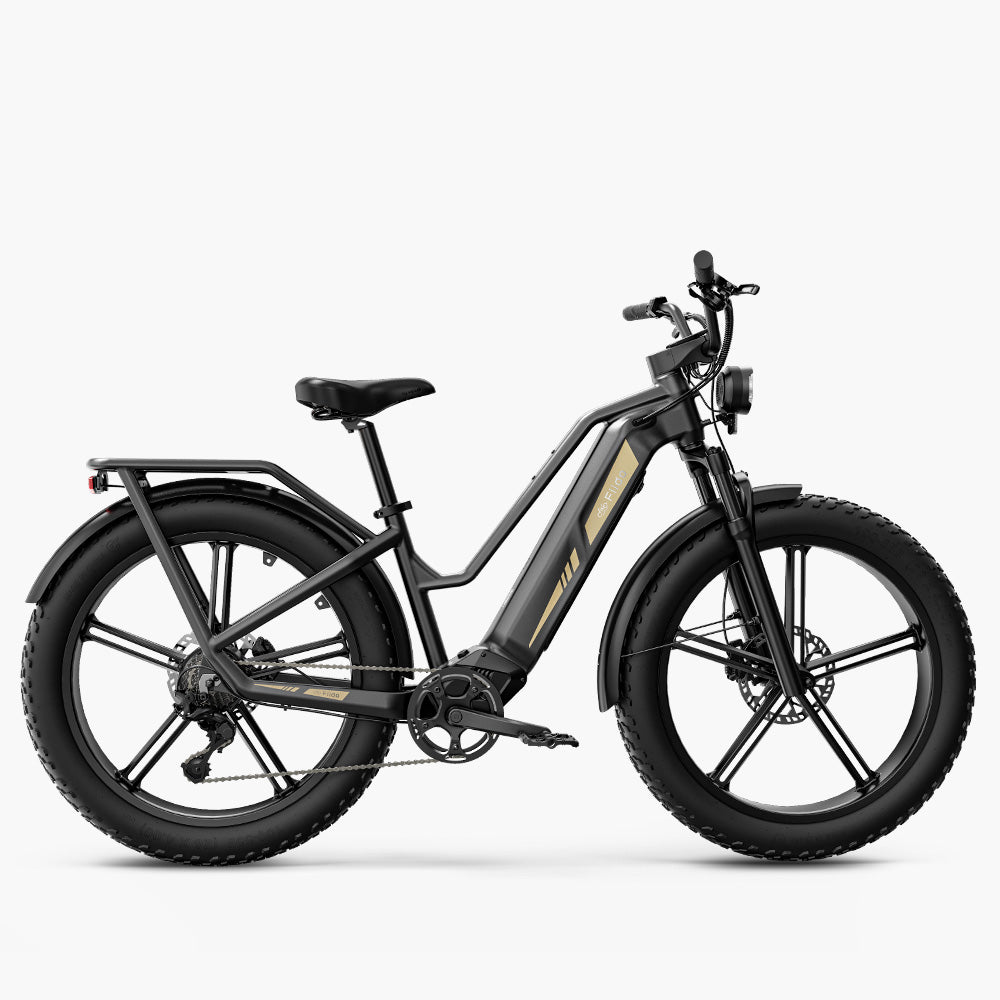
Fiido Titan Robust Cargo Electric Bike
A powerhouse with a 347 km range and 4-piston brakes, ideal for hunting and fishing trips.
Reminder: Prices are subject to the product detail page ,some earlier card details may have been updated.
-
Positioning: Designed for riders who need reliability under heavy load or long distances.
-
Battery & Range:
-
Single battery: ~71.9 miles (116 km)
-
Three-battery setup: up to ~216 miles (348 km)
-
-
Why it qualifies:
-
High-capacity battery system with modular expansion
-
Strong torque for hills and heavy loads
-
Stable performance even off-road or in intense use
-
-
Real-world advantage: Riders can plan long routes without constantly recalculating remaining battery.
-
Ideal for: Long-distance commuters, adventure riders, heavy-load users
Fiido Nomads — Balanced Range for Extended Comfort
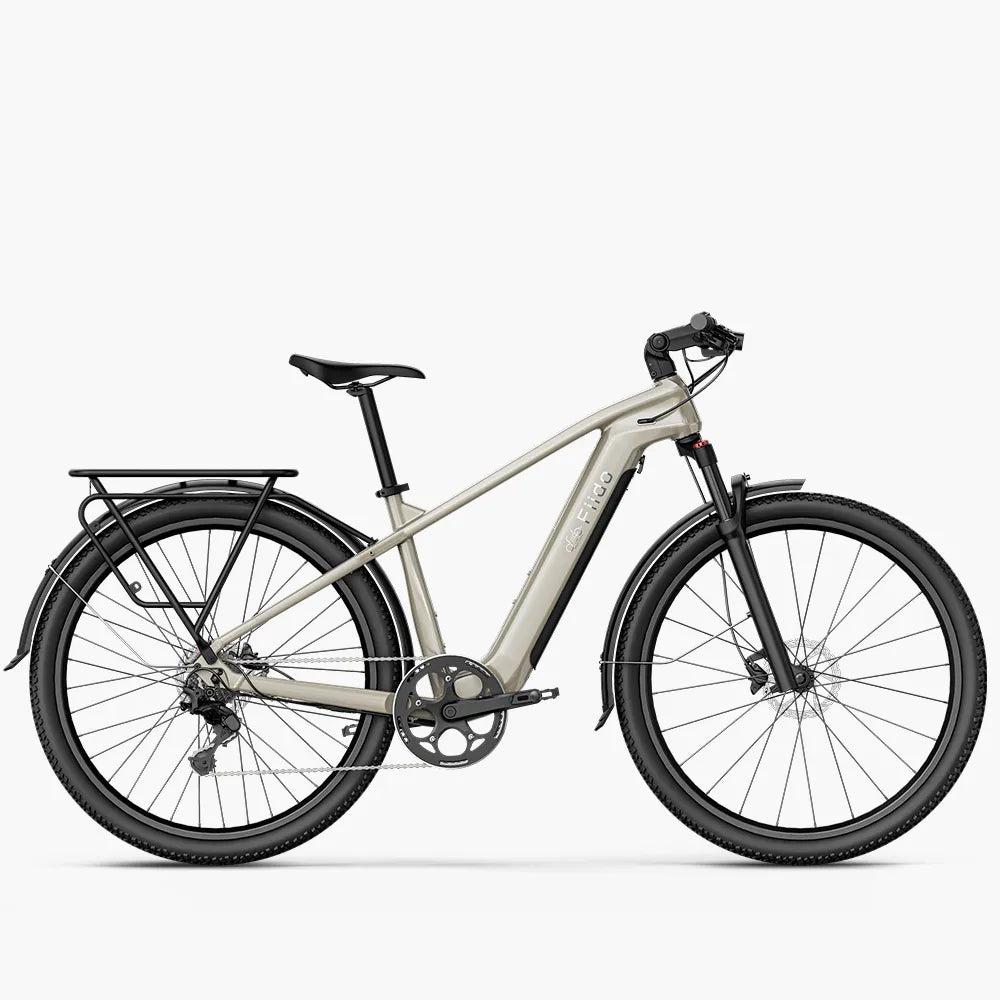
Fiido Nomads Touring E-bike
Long-range electric touring bike for comfortable, all-terrain travel and city exploration.
Reminder: Prices are subject to the product detail page ,some earlier card details may have been updated.
-
Positioning: Long range with focus on comfort for extended rides.
-
Battery & Range:
-
Single battery: ~49.3 miles (79 km)
-
Three-battery setup: up to ~150 miles (241 km)
-
-
Why it qualifies:
-
Efficient energy use at mid-assist levels
-
Ergonomic geometry for long rides
-
Predictable 80–100 km range in typical conditions
-
-
Ideal for: City-to-suburb commuters, weekend long rides, riders prioritizing comfort
How to Choose a Long-Range E-Bike That Fits You
Choosing a long-range e-bike isn’t just about the numbers on the spec sheet. Follow these steps to pick a bike that truly meets your needs:
Step 1: Assess Your Daily Riding Needs
-
Distance, terrain, and load matter more than advertised range.
-
Ask yourself: Do I ride short urban trips, long commutes, or carry cargo?
Step 2: Determine the Range You Actually Need
-
Multiply your longest daily ride by 1.5–2 to leave a safety buffer.
-
Short rides (under 20 km/day) may not require long-range models.
-
Medium rides (30–50 km/day) → 700–900 Wh battery recommended.
-
Long rides (50 km+ or heavy loads) → 1000 Wh+ for peace of mind.
Step 3: Consider Riding Conditions
-
Hills and wind → prioritize torque and motor efficiency.
-
Stop-and-go city rides → prioritize smooth, proportional pedal assist.
-
Cargo → choose bikes with stable battery management under load.
Step 4: Match Bike Features to Your Use Case
-
Daily commuters → light, reliable, minimal maintenance.
-
Multi-day riders → large battery, strong torque, durable frame.
-
High-load users → stable under weight, consistent range.
Step 5: Verify Real-World Performance
-
Check user reviews and real-life range tests.
-
Ensure battery quality, warranty, and service support match your expectations.
Following this framework ensures you pick a bike that fits your routine, not just the marketing claims.
How to Keep Your Long Range Electric Bike Performing Over Time
Long range performance improves with proper care:
-
Avoid full discharges whenever possible
-
Store batteries at moderate charge levels when unused
-
Adjust assist levels based on terrain
-
Maintain tire pressure and drivetrain efficiency
With proper habits, long range bikes remain dependable long after the first year of ownership.
Conclusion|Long Range Is Not About Distance — It Is About Peace of Mind
A long range electric bike does not change how far you can ride once.
It changes how confidently you plan every ride.
When you stop checking battery percentages and start focusing on your route, your time, and your day — long range becomes more than a specification.
It becomes a different way of riding.
And in that sense, long range electric bikes are not just the future — they are the natural next step.
Frequently Asked Questions (FAQ)
1. What defines a “true” long-range electric bike in real-world use?
A true long-range e-bike is not defined by a single advertised number. In real-world riding, it should reliably deliver 80–100 km or more per charge, maintain consistent performance across seasons, and require fewer charging cycles per week.
2. Why does real-world range often differ from advertised range?
Most advertised range figures are measured under ideal conditions, such as low assist levels, flat terrain, light rider weight, and warm temperatures. In everyday riding, actual range is typically 20–40% lower, depending on terrain, load, riding style, and weather.
3. Is a bigger battery always better for long-range performance?
Not always. While a larger battery increases potential range, motor efficiency, total weight, and bike design play an equally important role. A well-optimized system can outperform a heavier bike with a larger battery.
4. What are the benefits of a multi-battery setup like the Fiido Titan?
A multi-battery setup provides:
-
Significantly extended real-world range
-
Reduced charging frequency
-
Better long-term battery health
-
Greater confidence for long trips and heavy loads
This setup is especially valuable for commuters, adventure riders, and cargo users.
5. How can riders maximize the range of a long-range e-bike?
Range can be improved by 15–25% or more with simple habits:
-
Use high assist only for starts and hills
-
Cruise in mid-level assist
-
Maintain proper tire pressure
-
Avoid unnecessary weight


